Terra (Earth)
In the temple of the Good Goddess on the Aventine Hill in Rome,
non-poisonous snakes roamed freely in the precincts to encourage the fertility
of female clients.
At least as far back as Minoan times, snakes were associated with the life-giving
powers of an Earth-goddess
(Gaia, Cybele, Terra, etc.).
In the later Roman Mithraic cults, the serpent symbolised the passage of the sun along the ecliptic.
The benign attributes of snakes survived their Judæo-Christian demonisation for a remarkably long time.
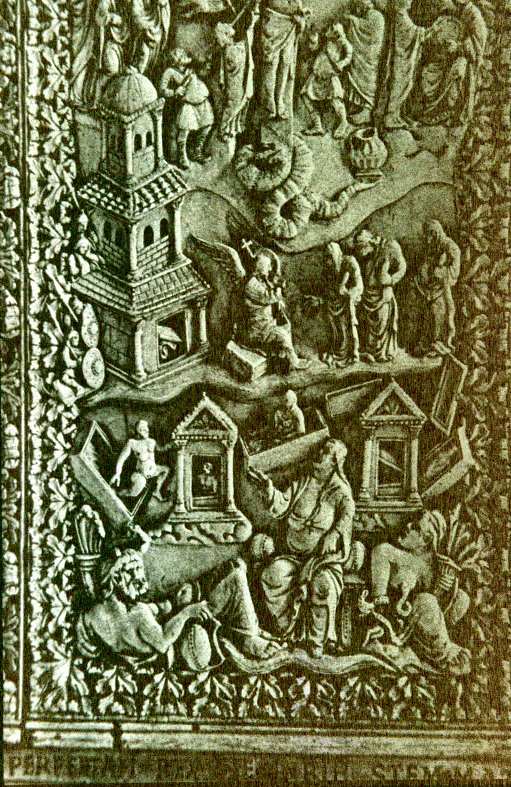
Thus a 9th century ivory book-cover possibly from Rheims depicts the Resurrection
of the Dead
leaving rather Roman mausolea to join the saints in the New Jerusalem,
viewed with satisfaction by Oceanus (bottom left), Roma (a matron!) and Terra
suckling a curling snake.
Interestingly, the snake-as-Satan also features at the base of the Crucifixion.
now in the Stadtsbibliothek in Munich
Even later, in the 11th and 12th centuries, on the psalm-sheets known as Exultet
Rolls because their first word was Exultet (Rejoice!)
Terra (sometimes decently clothed) appears nurturing various animals, including
bullocks, does, stags and snakes.
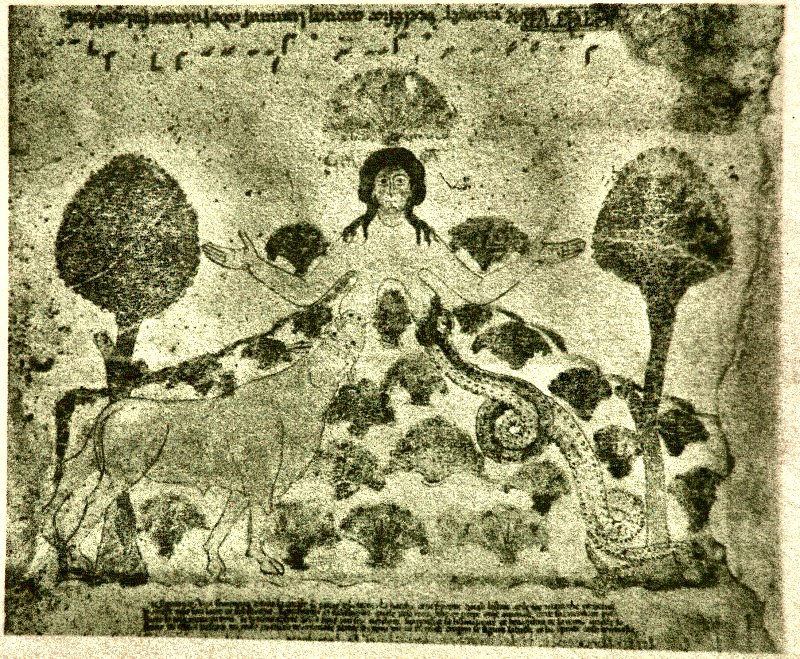
from Monte Cassino, now in the Apostolic Library, the
Vatican
Gosmer, Denmark.

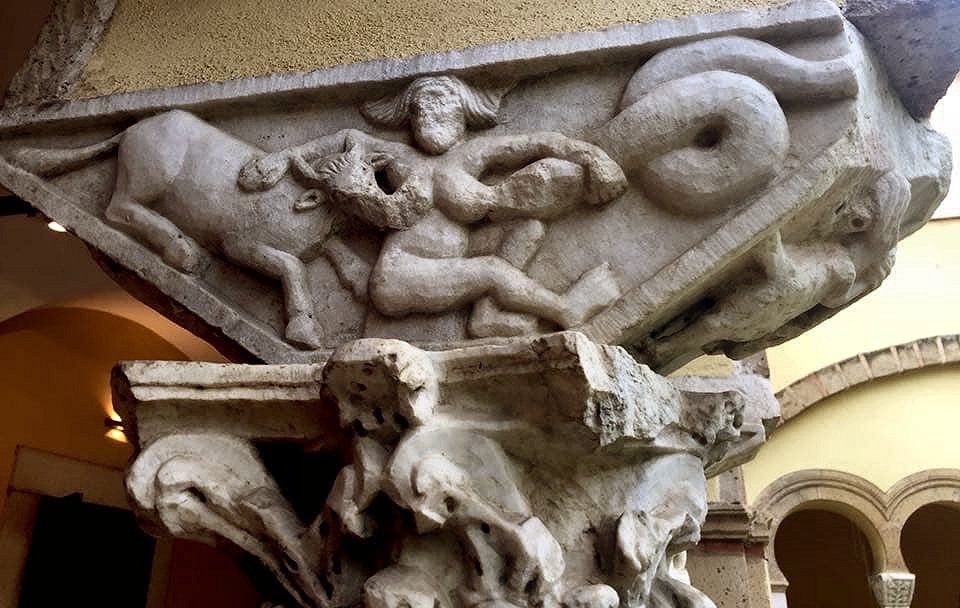
This remarkable capital in the remarkable cloister of Santa Sofia at Benevento
in Calabria (Italy)
shows a naked Terra (with overtones of Luxuria, and without Cornucopia)
suckling an ox and a snake...
as does this one (more Luxuria than Terra) from 1425.
Rabanus Maurus: De rerum naturis. Vatican, Biblioteca Apostolica Vaticana,
Pal. lat. 291, detail of folio 142r. .
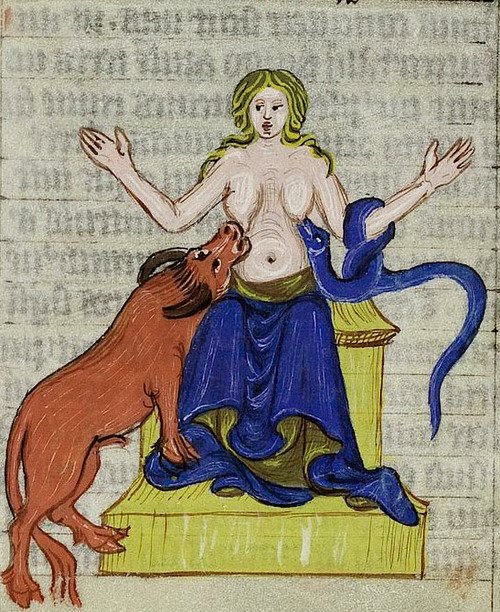
At Lihme in Denmark, Terra is an anthropomorphic tree : The Tree of Life or Nordic World-Tree, Yggdrasill.

...while the woman suckling snakes at Bråby, also in Denmark, is (of
course) not Luxuria.
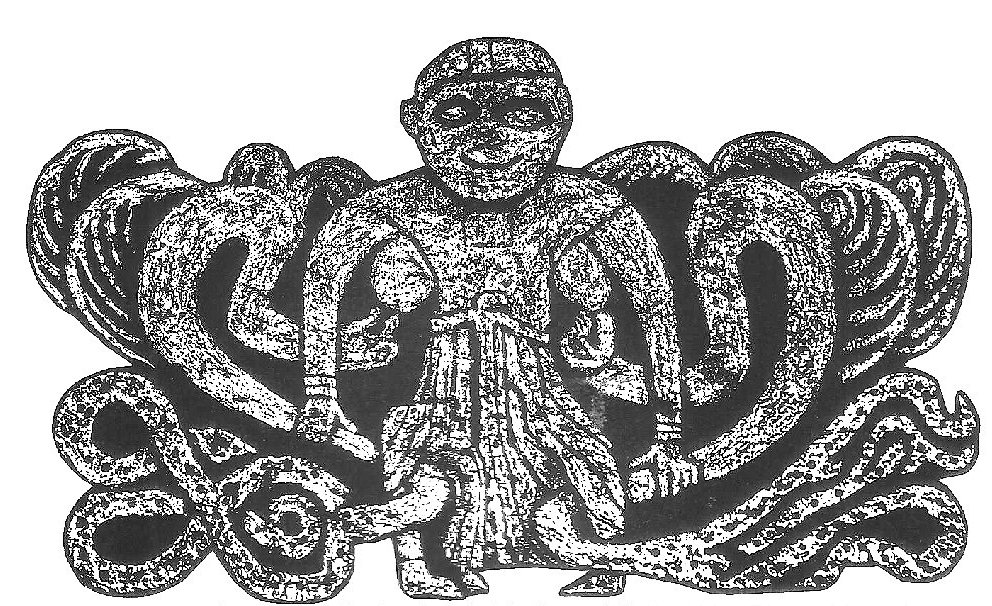
In Danish iconography the snake also incorporates the Nordic 'world-snake'
(Midgårdsormen) which encompassed the earth.
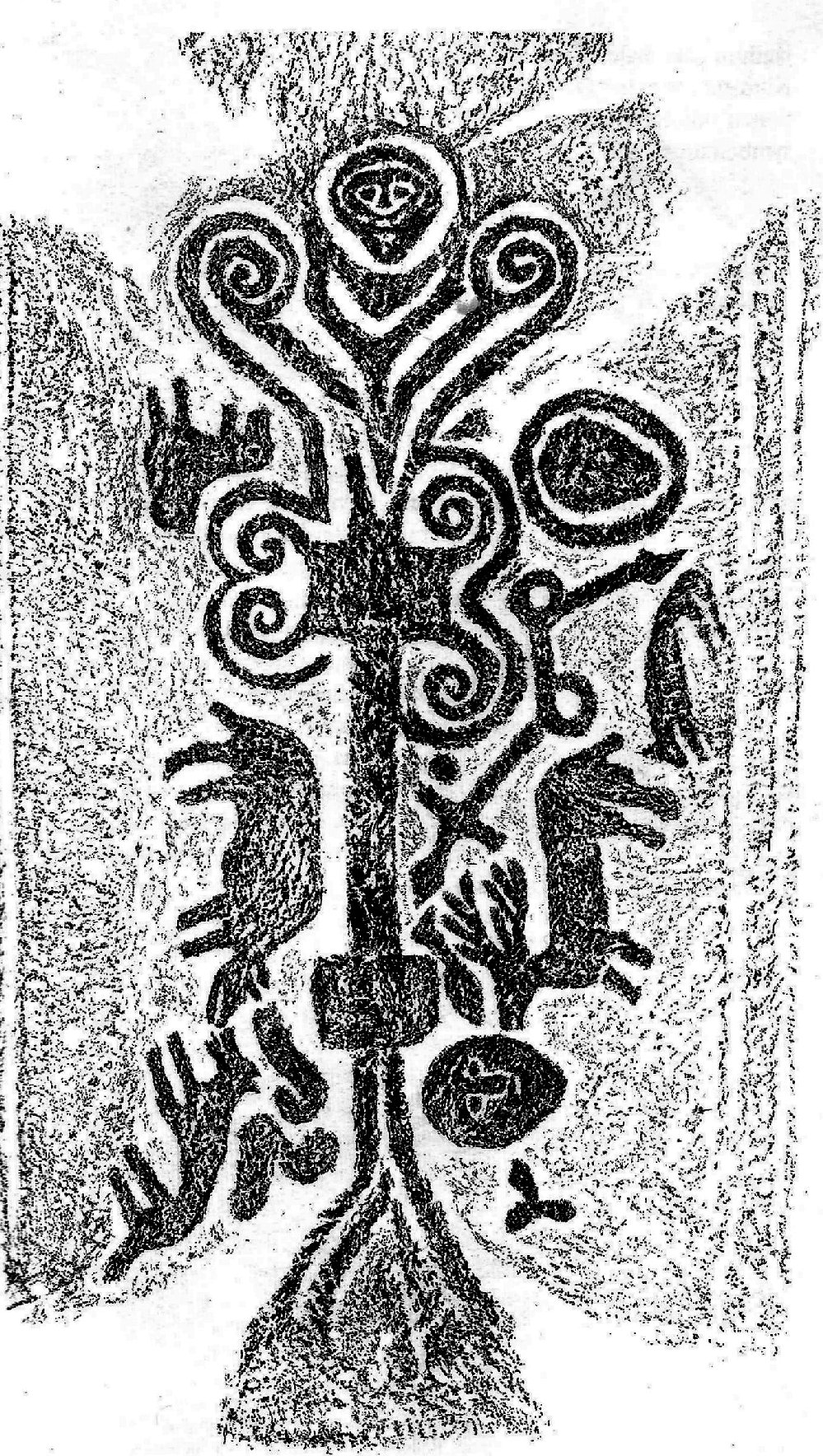
The world tree was the ash Ygdrasill, from which Odin hanged himself.
A grave-slab at Klim shows the world-tree with Christ/Odin's head at the
top - though the spirals
on either side of it could be interpreted as breasts - in which case
the head at the bottom, near the roots, might be Odin/Woden.
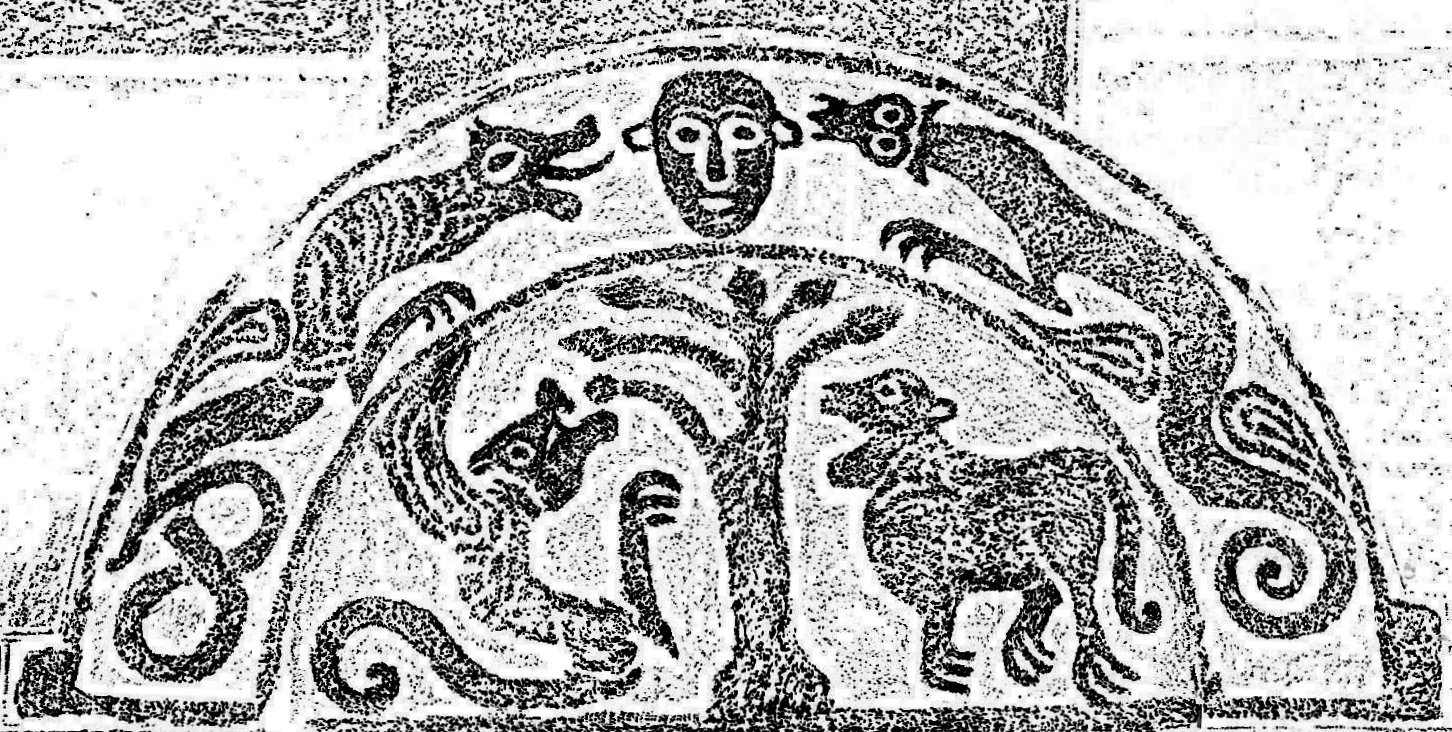
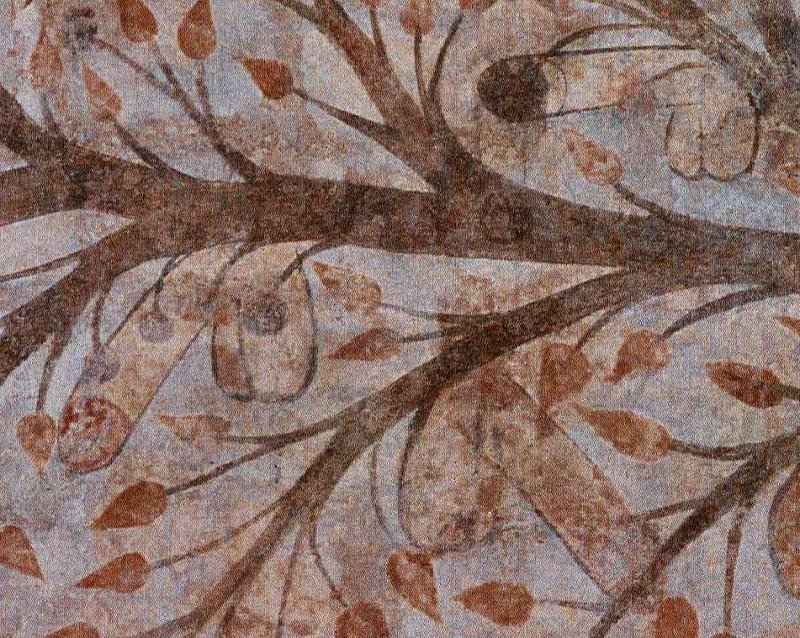
The Vindblæs tympanum in North Jutland is really a World Tree, but
has many iconographic resonances,
which would need a whole dissertation, especially when compared with the Tree
of Life mural
at Massa Marittima in Tuscany.
________________________
But - back to Terra:
another Mediterranean example of Terra Mater/Gaia without Nordic overtones
or implications
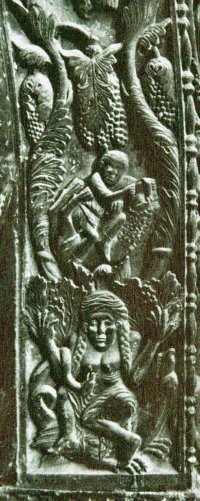
can be seen on the central portal of the seminal,
Byzantine-inspired Basilica of San Marco in Venice,
where a braided Terra sits amongst stylised palm-fronds, suckling a snake.
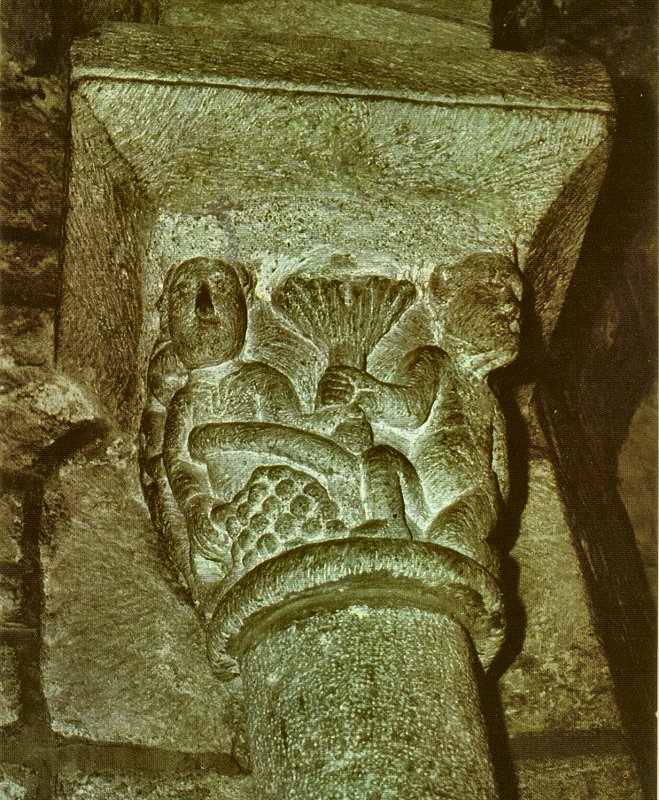
At Riom-ès-Montagnes (Cantal) the snake entwines rather than suckles
her on a twelfth-century capital,
but the sheaf of wheat is very obvious. She holds it together with an enigmatic
unsexed but probably male figure.
Her cornucopia seems to feature apples (more appropriate in Auvergne) rather
than grapes.
At Maria-Laach abbey in Belgium, the tails of the snakes are cornucopias.
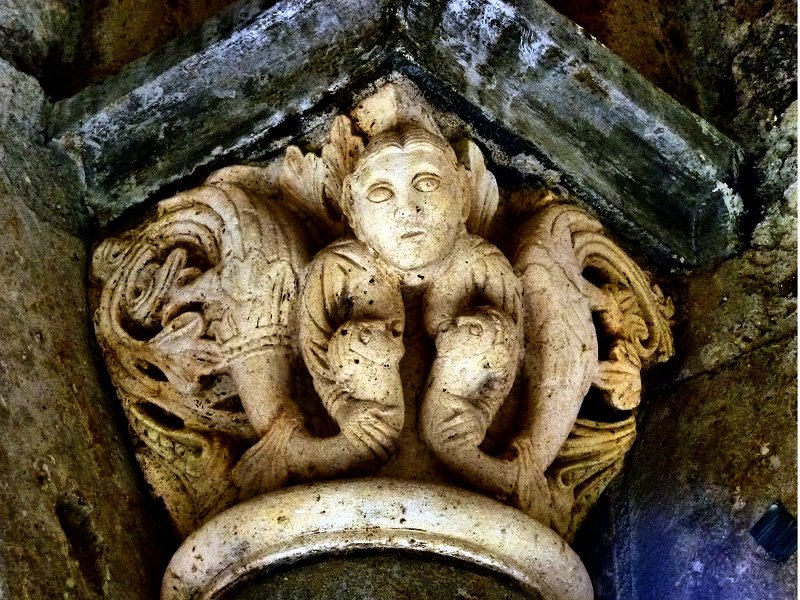
photo by Martin M. Miles
'Terra suckles a snake and a pig at Limburg. In a Mount Athos manuscript she
suckles a unicorn.'
For other examples, see Images of Lust, pages
67-69.
The enantiodromic reversal of Terra is the Femme aux Serpents, symbolising
Luxuria
who is depicted suckling snakes and other unclean beasts.
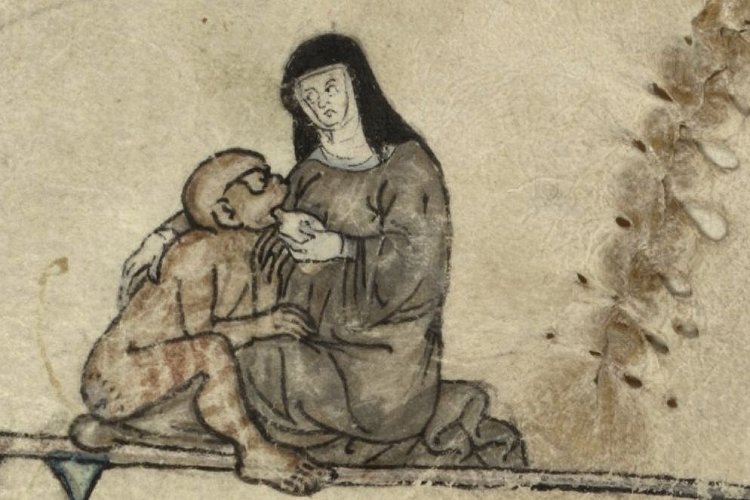
Later in the mediæval period appear caricatures, such as this one of
a nun suckling a monkey –
a tiny footnote in a manuscript of the Lancelot Romance at the John
Rylands Library, Manchester.
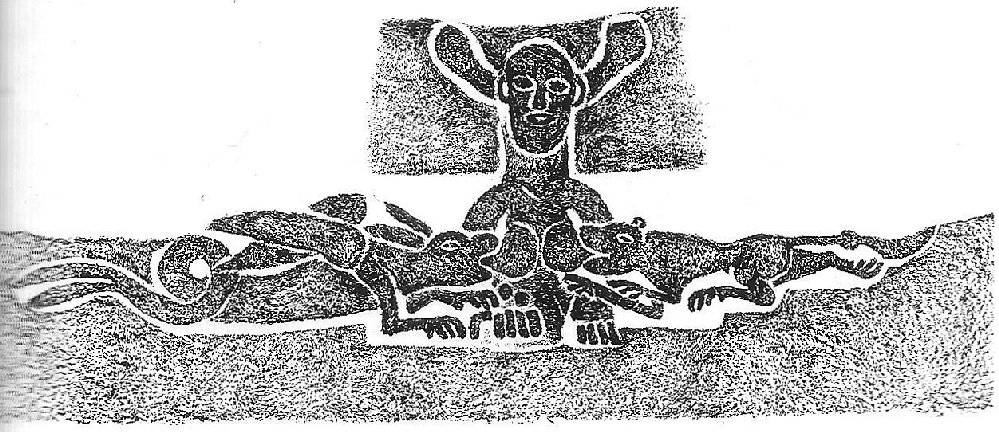
This rubbing (by Søren Nancke-Krogh) of the font
at Vester Egede in Southern Zealand in Denmark has been reversed,
Note the winged serpent = dragon.

But there is another
strand to the iconography of snakes :
the Mithraic.
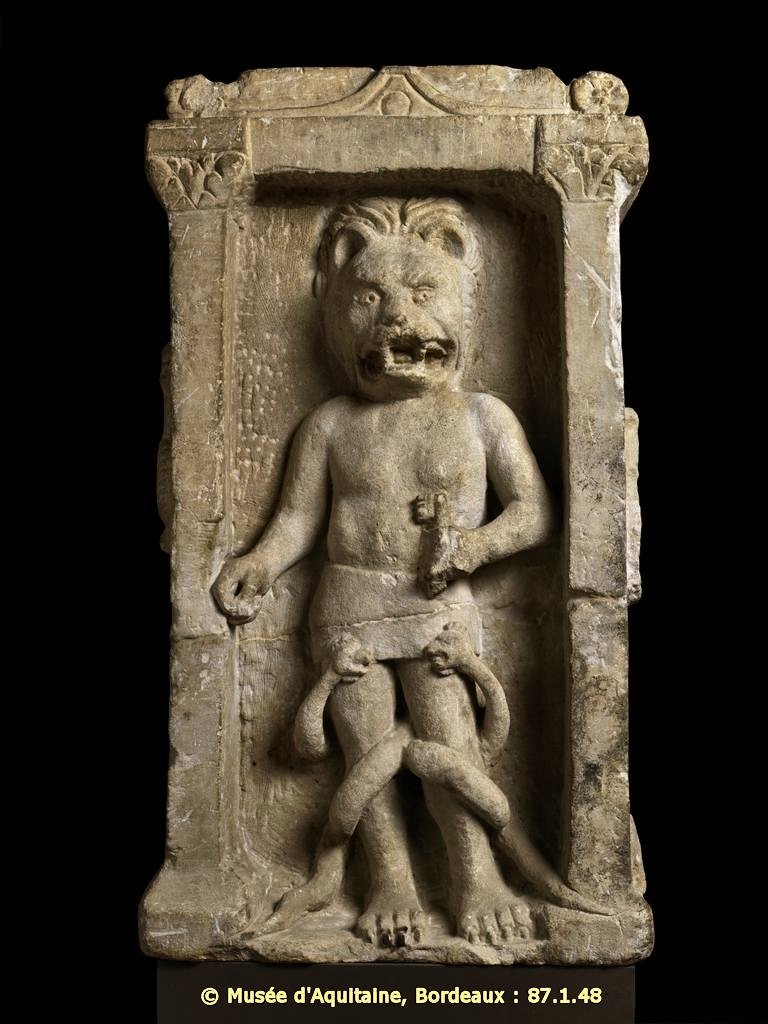
This Mithraic altar from the late Roman period in south-west France depicts
a lion-headed human male-ish figure,
wearing a kind of mini-skirt, with lion-headed serpents entwining its legs.
The serpent represents the journey of the sun (the ecliptic),
and the lion represents the fourth of seven stages of initiation into the
cult.
The key he is holding represents the knowledge which will lead him to the
final stages, opening the doors to wisdom.
Mithras was a deity with loose connections to Mithra and Persian Zoroastrianism,
about whose cult there is good information on Wikipedia.
It was to Romans of the first to fourth centuries rather like Freemasonry
to business and professional men
of the 19th and 20th centuries.
It was an exclusively masculine affair, with members drawn from the middle
ranks of the governing and military (hierarchical) classes.
As with Freemasonry, status within the cult probably assisted status in one's
profession and/or society.
Practised in small, usually subterranean places, including caves, it involved
serious ordeals in stages, of which the fourth
is thought to be the one most commonly reached. The number seven refers to
the planetary bodies: sun, moon and five visible planets.
The central rite of the (chthonic ?) cult was the slaying of a bull representing
the creation of the cosmos.
The serpent represented evil, as in Christianity. But early Christians, who
sometimes shared buildings
with other cults, including Mithraists, managed to suppress the cult quickly
after they gained power
following Constantine's conversion and Theodosius' terrible decree outlawing
all other religions.
This altar illustrates an alternative model for various Romanesque motifs:
scary beast heads, animal-headed humans (theriomorphs), and the femmes/hommes
aux serpents.
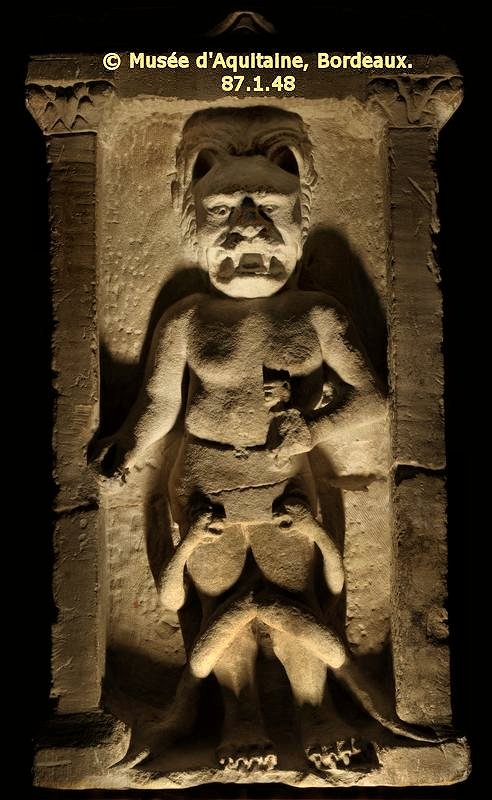
It may well have been lit from below in an enclosed space, adding a touch
of terror to its sanctity,
just as gory crucufixions concentrate the mind on Christian 'mysteries' and
contradictions..
A key is also carried by a unique male exhibitionist in Ireland.