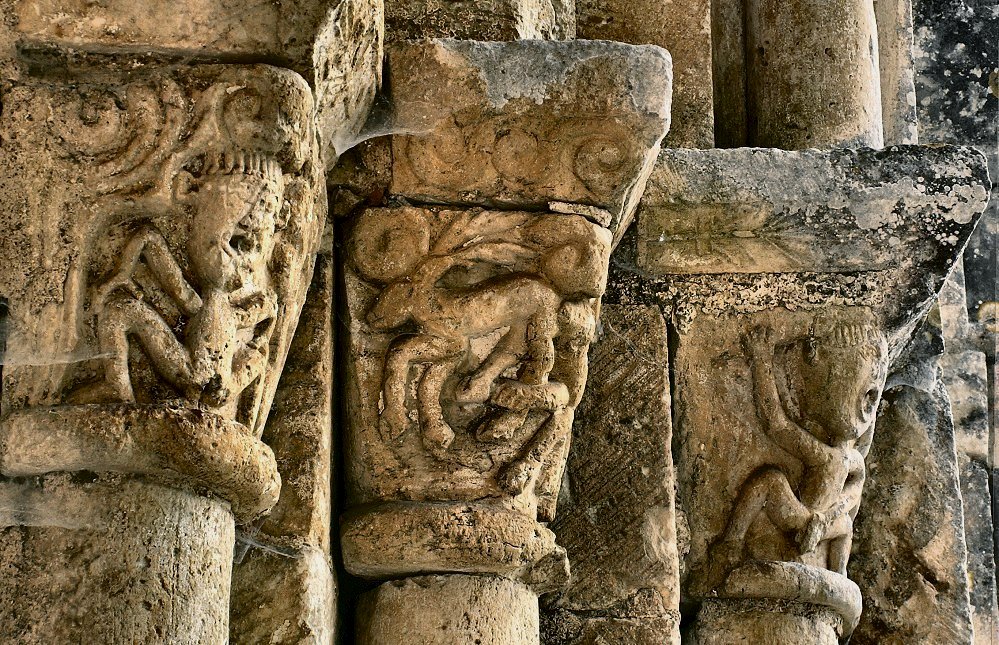
The female and male figures on the right-hand-side of the doorway are associated
with infernal snakes,
and both have open mouths.
The central capital seems to depict lustful beasts as well.
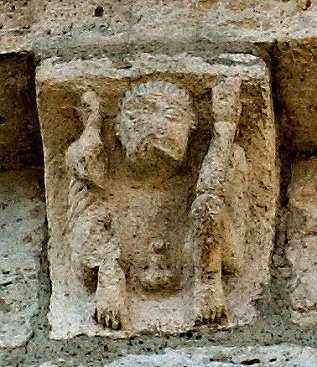
Note that the male has one hand up at head-height in the Atlas
(atlante) stance
(which is also a gesture in Indian dance)
while the other indicates his genitals - a stance common in the post-Romanesque
English and Irish figures.
Compare this male figure also with the curious Irish figure at Ballycloghduff.
Many 12th century female exhibitionist figures are, unlike
this one at Saint-Front-sur-Nizonne, acrobats
which perform the Atlas (supporting) function with their feet, while of course,
displaying their genitals.
Such a figure is on the doorway of the church at Rabastens
(Tarn).
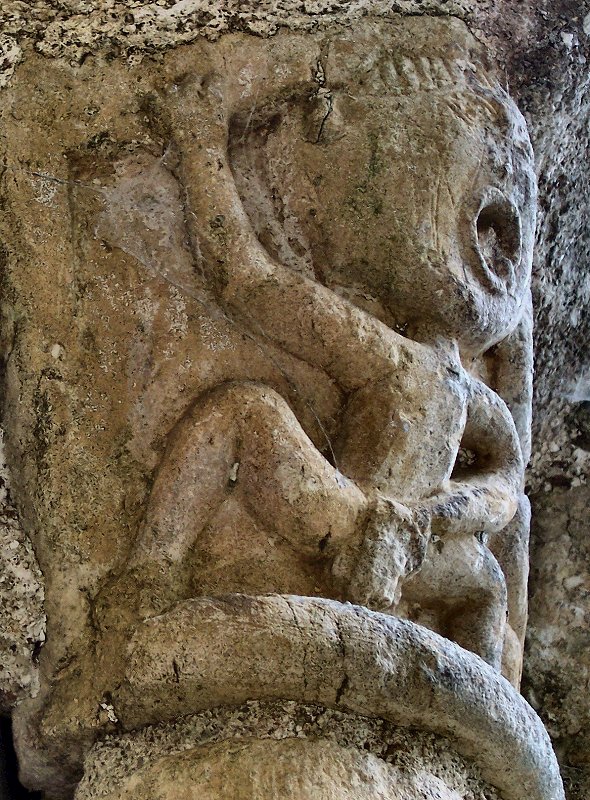
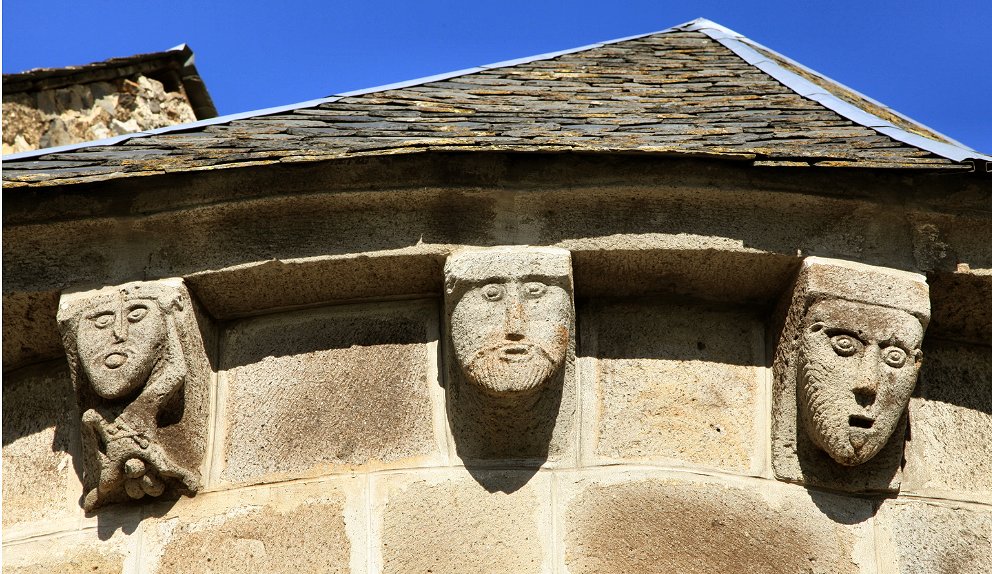
Compare the male with another semi-atlas tongue-protruding figure at La Godivelle (Puy-de-Dôme)...
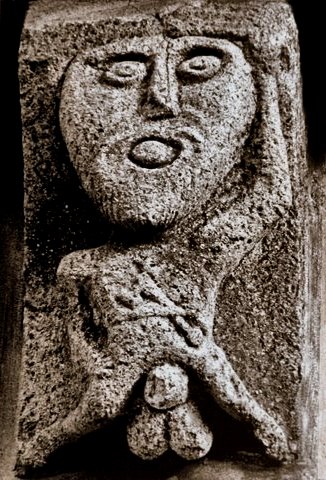
...and with an atlas-figure at Agen (Gers).
photograph by Julianna Lees
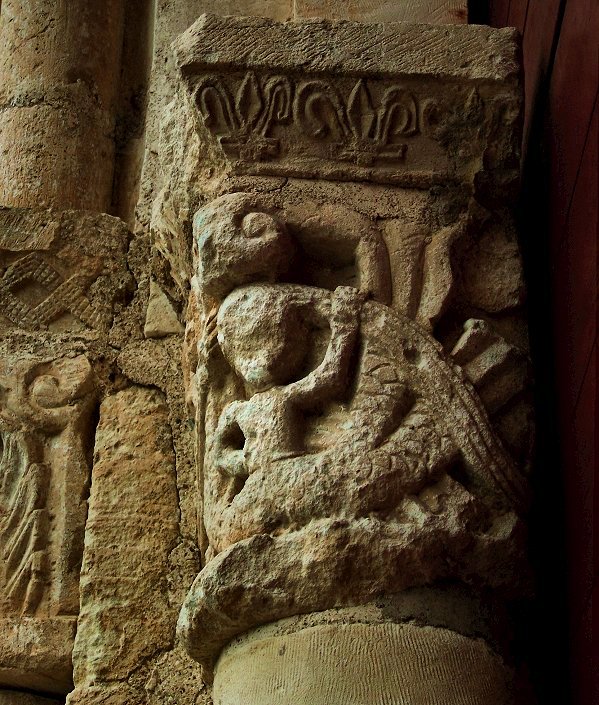
The hair-pulling mermaid on the other (N) side of the doorway is unusual in
having bifurcated tails,
one of each pair ending in a volute which resembles a devouring monster.
Between the exhibitionist figures on the S side, a collared hound attacks
a stag, under a similar volute-beast-head.
Might this represent a condemnation of the sport of hunting pursued exclusively
by rich landowners ?
(Usually, however, a hunting scene is interpreted in more fanciful, 'spiritual'
terms.)
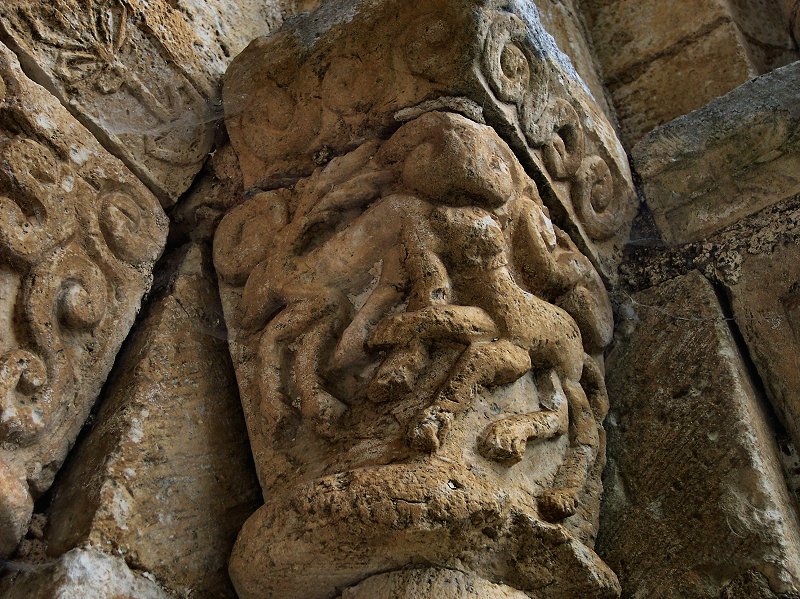
The South side of the doorway photographed thirty years earlier.
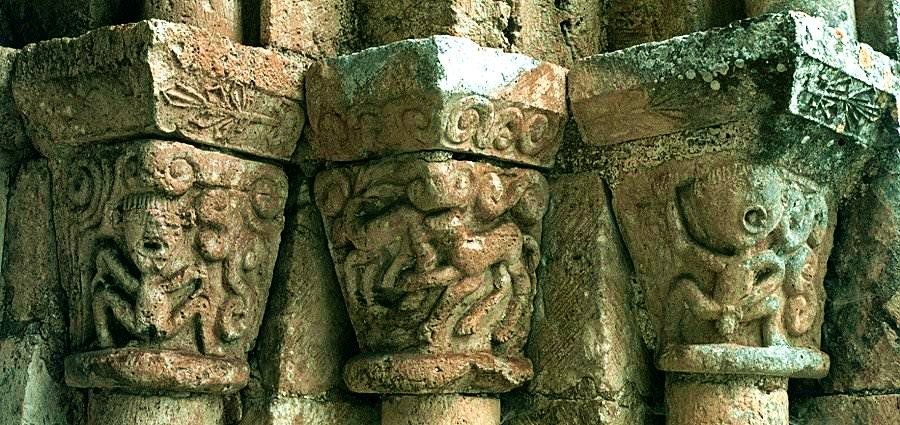
compare the female figure on the left with two striking representations of Luxuria
>
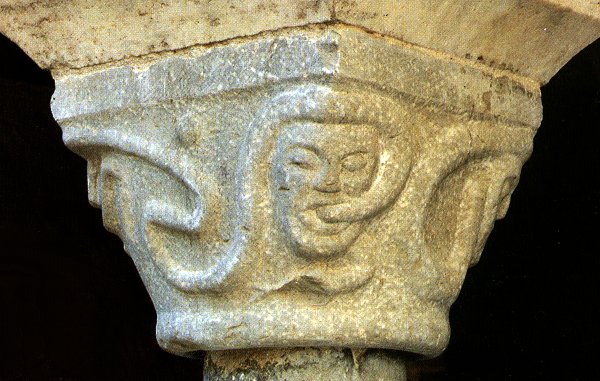
Snakes occur in other sinful contexts, as in this representation
of Calumny in the church of
Saint-Génis-des-Fontaines (Pyrénées-Orientales). There
are two pairs of heads on this capital.
A snake issues from the mouthof one calumniator and passes, wig-like, over his
head,
does a zig-zag and passes over the head of his companion, and enters his mouth.
photograph by Julianna Lees